

How to Commission Handmade Memory Items: A Step-by-Step Guide
Table of Contents
- Why Commission Handmade Memory Items Instead of Buying Mass-Produced
- Custom Keepsake Ideas: What You Can Have Made From Meaningful Materials
- Memory Items Made From a Loved One's Clothing: Quilts, Pillows, and More
- How to Commission a Custom Keepsake: A Step-by-Step Process
- How to Choose an Artisan: Questions to Ask and Red Flags to Avoid
- Pricing, Deposits, and Timelines: What to Expect
- How to Preserve Sentimental Items: Shipping, Handling, and Care
- Conclusion: Turning Memories Into Heirlooms
- Frequently Asked Questions
Last Updated: October 19, 2026
Why Commission Handmade Memory Items Instead of Buying Mass-Produced
A handmade memory item is a custom-made keepsake built from your own materials, such as a loved one's clothing, photographs, or handwriting, and designed to last for generations. At Johnson Heirloom, we've spent over eight years turning those materials into quilts, pillows, and embroidered pieces, and we can tell you the difference shows. Mass-produced blankets and printed tokens come off an assembly line. A commissioned piece is built around your story, one at a time.
Here's what most guides get wrong: they treat a keepsake like a product to buy. It isn't. It's a small project with a brief, a maker, an approval step, and a care plan. Below, we'll walk you through the whole process, from picking your materials to opening the box.
The short version: mass-produced is faster and cheaper. Commissioned work is personal, repairable, and made to be handed down.
Custom Keepsake Ideas: What You Can Have Made From Meaningful Materials
Almost any sentimental item can become a custom keepsake.

- Clothing becomes quilts or pillows
- Photographs become printed fabric panels or photo quilts
- Handwriting and signatures become embroidery on pillows, quilts, or apparel
- Favorite quotes and verses become embroidered text
A common mistake is sending the whole closet. Pick the pieces that carry the memory, then let the maker tell you how much fabric the project needs.
Memory Items Made From a Loved One's Clothing: Quilts, Pillows, and More
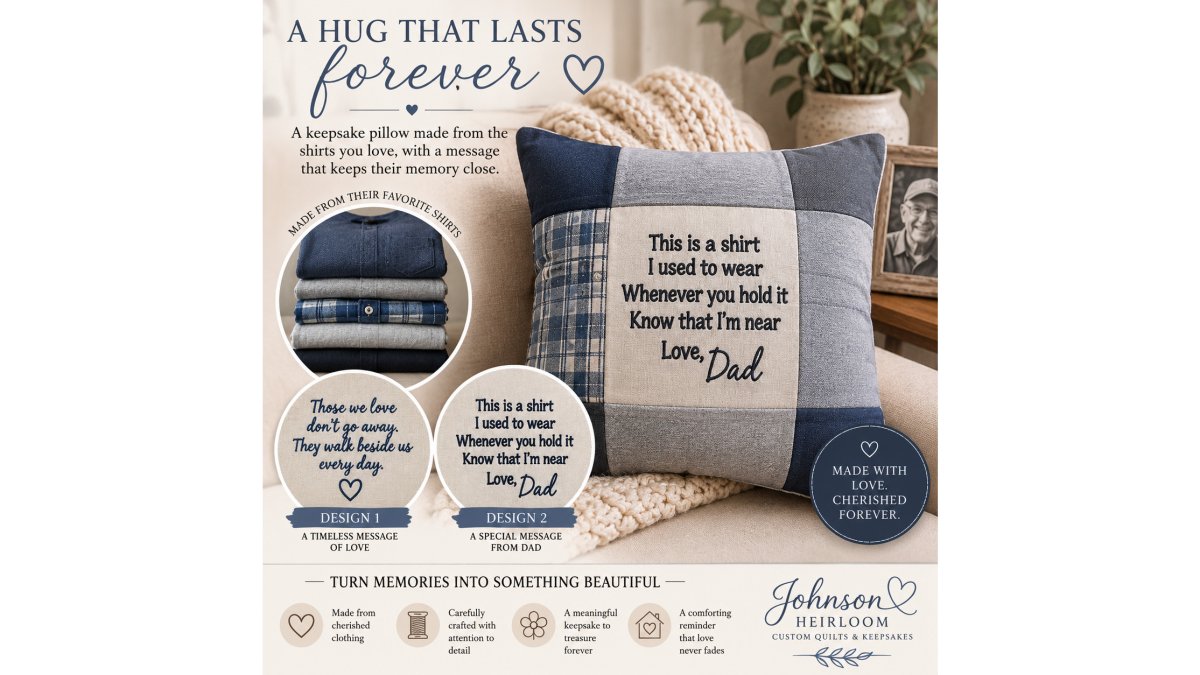
Clothing is the most requested material we work with, and it's easy to see why. A favorite flannel or a baby's onesie holds a shape and a smell that a photo can't. Here's how the main formats compare.
| Format | Best For | Materials Needed | Typical Use |
|---|---|---|---|
| Memory quilt | Large tribute, multiple garments | Adult clothing squares or 60+ baby outfits | Bed or wall display |
| Memory pillow | One meaningful shirt | A single garment | Daily comfort, sympathy gift |
| Photo quilt | Photos plus fabric | Up to 42 photos | Milestones, celebration of life |
| Embroidered apparel | Names, dates, signatures | Garment plus text details | Wearing or gifting |
Our Custom Memory Quilt is an oversized 65" × 65" throw built from your clothing, with optional photo panels and embroidered names, dates, or quotes. For a smaller tribute, our Custom Keepsake Memory Pillow is a 16" pillow made from one garment with a custom embroidered message. And for new parents, our Custom Baby Clothes Memory Quilt turns onesies into roughly 6" × 6" memory squares; it needs at least 60 baby outfits because tiny garments don't always yield a full square.

How to Commission a Custom Keepsake: A Step-by-Step Process
Commissioning a custom keepsake means hiring a maker to design and build a piece from your materials. The process follows a clear path, and knowing it up front removes most of the anxiety.
- Define the purpose. Decide whether the piece is for display, daily use, or gifting.
- Gather materials. Set aside clean garments and photos. Don't cut anything yet.
- Request a quote. Share photos of your materials and the size you want.
- Review the design. Approve the layout, photo placement, and embroidery text before work starts.
- Ship your items. Use a tracked method and keep a list of what you sent.
- Approve the proof. Check spelling on names and dates carefully.
- Wait for production. Handmade work takes weeks, not days.
- Open and inspect. Check seams and embroidery on arrival, then follow the care guide.
That's the whole loop. The steps that cause trouble are almost always design approval and shipping, so slow down there.
How to Choose an Artisan: Questions to Ask and Red Flags to Avoid
Choosing the right maker matters more than choosing the lowest price. A memory piece is a one-time build from materials that cannot be replaced, so vet the artisan the way you would vet a contractor: portfolio first, process second, price last. Most top-ranking guides stop at "check reviews." Use the checklist below instead.
1. Verify the portfolio matches your material
Ask to see finished pieces made from the same material you are sending. A maker who excels at photo quilts may have little experience with military uniforms, delicate baby knits, or handwriting embroidery. Look for close-up photos of seams, photo panels, and embroidery lettering, not just styled hero shots. Ask whether the examples were made from client-supplied materials or from the maker's own fabric; the answer tells you how much of the work is truly custom.
2. Confirm the proof and approval process in writing
A serious artisan sends a design proof, a layout mockup showing block placement, photo positions, and embroidery text, before cutting anything. Ask:
- Do you send a proof before cutting?
- How many revision rounds are included, and what does an extra round cost?
- Who signs off on spelling of names and dates?
If the answer is "we'll get it right" without a proof step, walk away. Spelling errors on a memorial piece cannot be undone.
3. Ask how unusable materials are handled
Garments arrive stained, torn, or too worn to yield a full square. Ask what happens then: does the maker substitute fabric, resize the block, or return the piece unused? Get the policy in writing.
4. Check communication and references
Response time before you pay is a preview of response time after you pay. Send one detailed question and note how long a substantive reply takes.
5. Review the written terms
Before any deposit, ask for a written agreement covering: scope, materials list, deposit amount and refundability, production timeline, shipping method and insurance, and the repair policy. If terms are verbal only, that is a red flag regardless of how good the portfolio looks.
Custom Memory Quilt | Oversized 65" × 65" Throw | Personalized Photo & Clothing →
Red flags to avoid
- No proof or approval step before cutting
- Vague timelines ("a few weeks") with no written date
- No written inventory or receipt for materials you ship
- Reluctance to answer questions about handling remains, ashes, or irreplaceable textiles
- Pressure to pay a full balance up front with no refund terms
- No examples of the specific material or format you need
Pricing, Deposits, and Timelines: What to Expect
Handmade keepsakes cost more than store-bought blankets because you are paying for design time, skilled labor, and one-at-a-time construction. Our Custom Memory Quilt is $849.99, our Custom Keepsake Memory Pillow is $45.00, and our Custom Baby Clothes Memory Quilt is $250.00. A photo-based "In Pictures" Memory Quilt runs $800.00 and typically ships within 6 to 8 weeks. Those numbers are a starting point, not a rule, here is how to read any quote you receive.

What drives the quote
Most quotes break into four parts:
- Base construction, the format and size (a 16" pillow versus a 65" × 65" quilt)
- Material complexity, photo panels, embroidery, patches, or fragile fabrics that need stabilization
- Design time, proofing, revisions, and layout work
- Shipping and insurance, both directions when you send materials in
Ask the maker to itemize these four lines. A single lump-sum price makes it impossible to compare quotes or to drop an add-on when the budget tightens.
Deposits and payment terms
Most artisans ask for a deposit to reserve production time, with the balance due before shipping. Get these terms in writing:
- Deposit amount and what it reserves
- Whether the deposit is refundable, and until what date
- When the balance is due
- What happens if you cancel after cutting starts
- Whether rush fees are quoted separately
Planning the timeline
Assume weeks, not days. Order at least two months ahead of a memorial service, birthday, or anniversary, and ask the maker to confirm the date in writing. Build in time for three things that commonly slip:
- Shipping your materials in, allow a week for tracked delivery and confirmation of receipt
- Proof approval, allow several days for revisions, longer if you are coordinating with family members
- Production and return shipping, the maker's stated window plus transit time
If you have a hard date, say so at the quote stage and ask whether a rush option exists and what it costs. Do not assume a rush fee guarantees delivery; confirm the date in writing.
How to Preserve Sentimental Items: Shipping, Handling, and Care
Preserving sentimental items starts before they leave your house. Wash garments and let them dry fully. Skip fabric softener and strong detergents. Photograph everything you plan to send, and label each piece with a sticky note if the story matters.
For shipping:
- Use a tracked, insured service
- Pack in a waterproof bag inside a sturdy box
- Include a written list of contents and your contact details
- Keep the tracking number until the finished piece arrives
Once your keepsake is home, care is simple. Spot clean when you can. Wash quilts gently and air dry when the maker's instructions allow it. Keep pieces out of direct sun, and store them flat rather than folded for long periods. For guidance on textile care, the American Institute for Conservation's care guides are a solid reference, and the Smithsonian's preservation advice covers storage basics for family heirlooms.
Conclusion: Turning Memories Into Heirlooms
The hard part of commissioning handmade memory items isn't the sewing. It's trusting a stranger with something you can't replace. That's why we treat every package like it's the only one.
If you're ready to turn a drawer of shirts into something your family will fight over in the best way, we can help. Our custom memory quilts, embroidered memory pillows, and baby clothes quilts are all made to order, by hand, from your materials. View our keepsakes and start with a quote.
Frequently Asked Questions
What are some memory items made from loved ones' clothing?
Common handmade memory items include quilts and pillows. A custom memory quilt can incorporate photo panels and embroidered details, while a memory pillow often features a favorite shirt and an embroidered message. These items turn everyday clothing into a lasting tribute you can display or use every day.
How do I commission a handmade memorial keepsake?
Start by choosing an artisan whose style matches your vision. Discuss your ideas, send clean garments, and approve a design before production. Expect to provide details like names, dates, and special features. Timelines vary. Always ask about the process, materials, and care instructions upfront.
What information should I give a maker when requesting a custom keepsake?
Provide clear details: the type of item you want, the materials you're sending, any special features to preserve (pockets, buttons, embroidery), and personalization like names or quotes. Share inspiration photos if possible. Also discuss timelines, budget, and shipping. The more specific you are, the better the final piece will match your expectations.
How should I send and care for clothing used in a memory item?
Ship garments clean and free of strong odors. Use a trackable shipping method and consider insurance. Once the item is complete, follow the maker's care instructions. Many memory quilts can be gently washed, but always check specific guidance to preserve the fabric and stitching for years.


