

Best Way to Store Keepsake Quilts: Long-Term Care
Table of Contents
- Why Keepsake Quilt Storage Matters More Than You Think
- How to Fold a Quilt for Storage Without Permanent Crease Damage
- Cleaning and Laundering a Keepsake Quilt Before It Goes Into Storage
- Choosing the Best Quilt Storage Containers and Materials
- Flat, Rolled, or Folded: Matching the Method to Your Quilt and Space
- How to Store an Antique Quilt or One With Fragile Fabrics
- How to Store Quilts Long Term: A Practical Maintenance Schedule
- Frequently Asked Questions
Last Updated: October 14, 2026
Why Keepsake Quilt Storage Matters More Than You Think
The best way to store keepsake quilts is to keep them clean, flat or gently rolled, wrapped in breathable cotton, and away from light, heat, and damp. At Johnson Heirloom, we have spent over eight years turning shirts, baby clothes, and wedding gowns into heirlooms, so we have heard every storage horror story there is.
Here is the part that stings. A quilt you spent months saving for can be ruined by a plastic bin and a hot attic in a single summer.
A keepsake quilt is a textile, not a decoration. It holds cotton, thread, batting, and sometimes lace or embroidery that cannot be replaced.
That changes the rules. You are not just tidying a closet. You are slowing down time.
What Actually Damages an Heirloom Quilt in Storage
Four things cause most quilt damage: light, moisture, pests, and pressure.
- Light fades dye and weakens fabric fibers over time
- Moisture invites mold, mildew, and musty odors
- Pests chew through natural fibers and leave stains behind
Heat makes all four worse. A hot attic or damp basement is the worst place in the house for a vintage quilt.
How to Fold a Quilt for Storage Without Permanent Crease Damage
Folding is where most people accidentally harm their quilts. The fix is not a single technique, it is a system: pad every fold, rotate fold lines on a schedule, and never let the quilt carry its own weight in one spot for years.
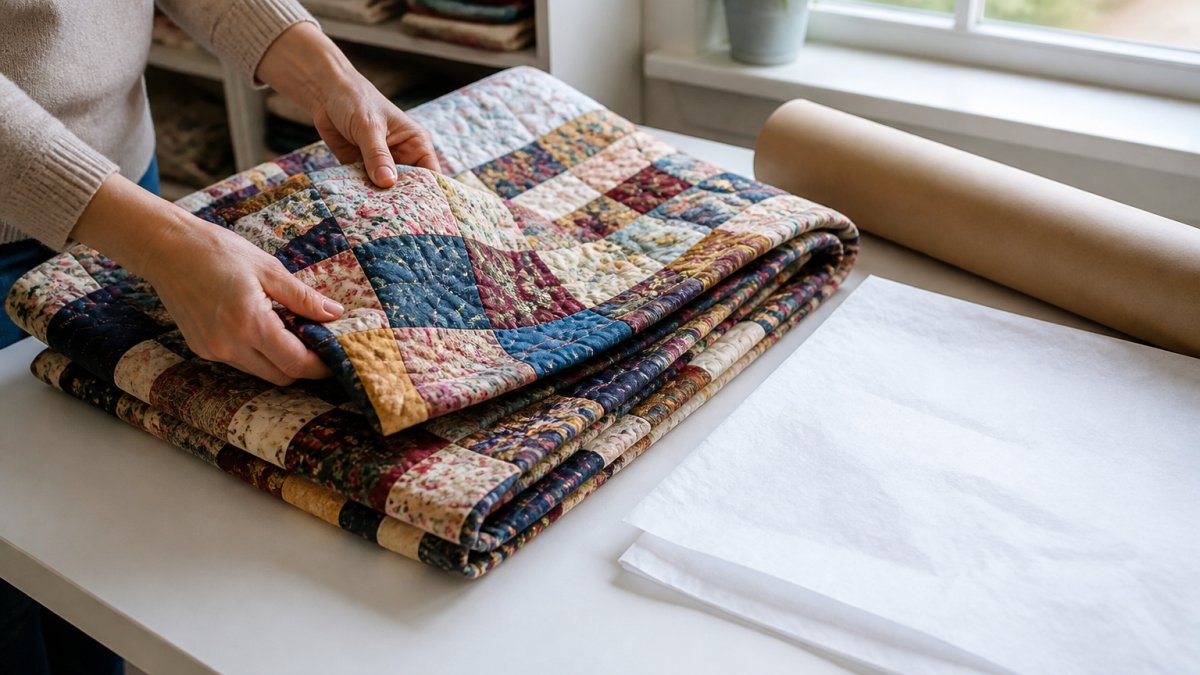
Start with a clean, flat surface, a bed or a table covered with a washed cotton sheet. Then:
- Lay the quilt face down and smooth out every wrinkle with your palms, working from the center outward
- Fold in thirds, then thirds again, keeping each fold soft rather than pressed
- Slide rolls of acid-free tissue or washed cotton sheeting along each fold line
- Store it loosely, never compressed under other items
Those tissue rolls are the trick most guides skip. They turn a hard crease into a gentle curve, and a gentle curve is what keeps fibers from fatiguing in one narrow band.
Why Creases Become Permanent
Cotton and batting fibers have memory. When a fold presses the same fibers along the same line for months, the fibers flatten and the batting loses loft there. That is why a quilt stored folded in one configuration for years shows a faint line even after it is aired out.
Padding the fold spreads the pressure across a curve instead of a line. Rotating the fold lines every few months moves the stress to fresh fibers before any single band fatigues.
Folding Around a Core to Prevent Sharp Fold Lines
For a fragile or antique quilt, skip folding altogether. Roll it instead.
Wrap the quilt around a cardboard tube covered in acid-free tissue or washed cotton sheeting. Roll loosely, snug enough to hold shape, loose enough that the fabric is not stretched.
If space forces you to fold, refold along different lines every few months. Rotating the folds spreads the stress across the fabric instead of concentrating it in one spot.
Matching the Fold to the Quilt
Not every quilt folds the same way. A few rules of thumb:
- Thin, sturdy pieced quilts: fold in thirds, pad the folds, and rotate every six months
- Thick quilts with high-loft batting: fold in quarters at most, and expect to rotate more often because the batting compresses faster
- Quilts with appliqué or embroidery: fold so the raised work faces inward and never sits on a hard fold line
Cleaning and Laundering a Keepsake Quilt Before It Goes Into Storage
Never store a dirty quilt. Soil, body oils, and food residue attract insects and set stains over time.
For a sturdy, modern quilt, machine wash cold on a gentle cycle with a mild detergent. Tumble dry low or lay it flat to dry.
When in doubt, do not wash it yourself. The Smithsonian Museum Conservation Institute guidance on caring for textiles is a solid starting point for anyone nervous about handling an older piece.
How to Prepare a Quilt for Storage After Washing
A quilt must be completely dry before it goes into storage. Not mostly dry. Completely.
- Let it air dry fully, turning it once or twice
- Check the batting through the fabric for any lingering dampness
- Let it rest in a dry room for a day before wrapping
That last point matters more than it sounds. Cool fabric often means trapped moisture.
Choosing the Best Quilt Storage Containers and Materials
The best quilt storage containers are breathable: cotton bags, acid-free boxes, or a clean cotton sheet. Anything that traps air and moisture is the wrong choice, no matter how sturdy it looks.
Here is how the common options compare:
American Flag Keepsake Quilt | Patriotic American Flag Quilt | Available →
| Material | Breathable | Protects From Light | Best For |
|---|---|---|---|
| Cotton sheet or pillowcase | Yes | No | Everyday storage, large quilts |
| Acid-free box | Partly | Yes | Long-term storage, folded quilts |
| Textile bag | Yes | Partly | Rolled quilts, hanging storage |
| Plastic bin | No | Yes | Never use for quilts |
Acid-free tissue and boxes cost more, but they protect against the slow yellowing that ordinary cardboard causes.
Why Plastic Bags and Airtight Containers Backfire
Plastic blocks airflow. That sounds protective, but it actually traps whatever moisture is already in the fabric.
A quilt stored in a plastic bag in a humid room becomes a breeding ground for mildew. The same goes for vacuum-sealed bags, which also crush the batting and flatten the loft permanently.
Use breathable material instead. Your quilt needs to breathe, even in storage.
Flat, Rolled, or Folded: Matching the Method to Your Quilt and Space
The right method depends on three things: the quilt's size, its condition, and how much room you have.
- Flat storage is best for fragile or antique quilts, but needs a spare bed or large shelf
- Rolled storage suits medium quilts and saves floor space
- Folded storage works for sturdy, modern quilts where space is tight
For a pristine, sturdy quilt with no fragile fabrics, folding is fine. For anything with lace, embroidery, or existing damage, choose flat or rolled.
Size matters too. A wall hanging or throw folds easily into a box. A queen or king quilt needs a bed, a large shelf, or a dedicated storage roll.
How to Store an Antique Quilt or One With Fragile Fabrics
Antique quilts need more care than modern ones. Older cotton and silk weaken with age, dyes fade faster, and the fibers that remain are already carrying decades of stress.
- Store flat if you can, on a clean shelf or under a bed, with acid-free tissue between the quilt and any surface
- Keep it out of sunlight, which fades vintage dyes fast and weakens already-fragile fibers
- Avoid hanging a fragile quilt, since its own weight can tear the fabric along the hanging edge
If your antique quilt has loose stitching or tears, get it assessed before storing it. Small repairs now prevent bigger damage later, and a conservator can tell you whether the fabric can tolerate handling at all.
Quilts With Embellishments, Lace, or Beading
Embellished quilts are their own category. Raised work, appliqué, embroidery, beading, lace inserts, creates pressure points that fold and crush differently than flat piecing.
- Never fold directly on a beaded or embroidered area; pad around it so the raised work sits in open space
- Roll embellished quilts rather than folding them, with the embellished side facing outward so it is not pressed against itself
- Line any storage surface with acid-free tissue, and place a layer of tissue over the embellishment before wrapping
For quilts that combine delicate materials, like a wedding gown quilt with lace and satin, treat the whole piece as fragile. Our Custom Heirloom Quilt uses high-quality cotton fabrics and 100% unbleached natural cotton batting, which holds up well to careful long-term storage.

When to Stop and Call a Conservator
Some situations are beyond home care. A textile conservator is trained to stabilize fragile fabric, remove old stains safely, and advise on whether a quilt should be handled at all.
Consider professional assessment if you see any of these:
- Active mold or mildew, especially with a musty smell that returns after airing
- Shattering silk, fabric that crumbles when touched
- Loose or missing beads, sequins, or lace that is detaching from the base fabric
A conservator can also advise on display versus storage. Some fragile quilts are safer displayed flat under glass with controlled light than folded in a box, and that is a judgment call best made in person.
How to Store Quilts Long Term: A Practical Maintenance Schedule
Long-term storage is not a set-and-forget job. A simple schedule keeps your quilt in good shape for decades.
| Task | How Often | Why It Matters |
|---|---|---|
| Check for dampness or pests | Every 3 months | Catches problems early |
| Refold along new lines | Every 6 months | Prevents permanent creases |
| Air the quilt in shade | Once a year | Refreshes fabric, releases odors |
| Inspect stitching and seams | Once a year | Spots wear before it spreads |
Write the dates on a note inside the storage box. Future you will thank present you.
Emergency Response: Dampness, Pests, and Mold
Act fast if you find a problem.
- Dampness: move the quilt to a dry room and air it out immediately
- Mold or mildew: isolate the quilt, then get it assessed by a conservator
- Insects: freeze small items in a sealed bag for several days, then air them out
Do not try to scrub mold out of an heirloom quilt yourself. You can set the stain and spread the spores.
Storing a quilt well takes patience, and most people only learn the rules after something goes wrong. If you would rather skip the storage anxiety entirely, Johnson Heirloom crafts heirlooms built to last: handmade goods made to be passed down, customized quilts, embroidery, and apparel, and more than eight years of experience turning treasured clothing into keepsakes. Our Custom Memory Quilt starts at $500, and each piece is made specifically for you.

Frequently Asked Questions
Should I wash a keepsake quilt before storing it?
Only if it actually needs it. Body oils, smoke, and food residue attract insects and set stains over time, so a soiled quilt should be cleaned before storage. Use cold water on a gentle cycle with a mild detergent, then dry on low or lay flat. If the quilt is vintage, fragile, or has hand-stitched embellishments, spot-clean instead or consult a textile conservator. A quilt that is already clean should be aired for a few hours and stored as-is.
What should I wrap a keepsake quilt in for storage?
Wash and dry a 100% cotton sheet, then wrap the folded or rolled quilt in it. Cotton is a breathable material that lets air circulate while blocking dust and light. For extra protection at fold lines, tuck archival tissue paper into the creases first. Avoid plastic bags, vacuum-sealed bags, and airtight containers, which trap moisture and can cause mildew, yellowing, and musty odors over time.
Can I store a keepsake quilt in a plastic container?
A plastic bin with the lid snapped shut traps moisture against natural fibers, which encourages mold, mildew, and yellowing. If you use a plastic bin, leave the lid off or drill ventilation holes and line the inside with washed cotton. A better option is an acid-free box sized to the folded quilt, or a cotton pillowcase or sheet wrap placed on a shelf in a climate-controlled closet away from exterior walls.
How often should I refold a quilt in storage?
Refold a stored keepsake quilt every six months, and inspect it at the same time. Quilts develop permanent crease damage and fabric weakness along fold lines when left in one position for years. Refolding along different lines spreads the stress across new areas of the quilt top. While you have it out, check for insects, dampness, or discoloration, then let it air for a few hours before wrapping and putting it back.


