

Bluebird Gardens vs Kreative Embroidery: Which Is Better?
Last Updated: October 26, 2026
Quick Summary
Neither shop wins outright: Bluebird Gardens focuses on garden-inspired decorative motifs and appliqué-friendly designs, while Kreative Embroidery offers a broader everyday catalog with more lettering and monogram sets. This embroidery review shows the right pick depends on whether you need a specific style or a wide net.
- Bluebird Gardens builds its catalog around botanical and garden themes sized for quilts, tea towels, and home linens.
- Kreative Embroidery spreads wider with everyday motifs, holiday sets, monograms, and lettering packs.
- Confirm file formats, hoop sizes, and split instructions before buying from either shop.
- Compare bundles by how many designs fit your actual project list, not the headline count.
- Many design files are personal-use only by default, so check commercial licensing before selling finished items.
Table of Contents
- Bluebird Gardens vs Kreative Embroidery: The Short Answer
- Catalog and Design Variety: What Each Shop Actually Offers
- File Formats, Hoop Sizes and Machine Compatibility
- Pricing, Bundles and Free Designs Compared
- Licensing and Commercial Use: Read the Fine Print
- Stitch-Out Quality and Design Performance
- Questions to Ask an Embroidery Business Before You Buy
- Custom Embroidery Turnaround Time and Download Experience
- Frequently Asked Questions
Bluebird Gardens vs Kreative Embroidery: The Short Answer
If you're weighing Bluebird Gardens vs Kreative Embroidery review options, the honest answer is that these are two different tools for two different jobs. Bluebird Gardens leans toward garden-inspired decorative motifs and appliqué-friendly designs, while Kreative Embroidery leans toward a broader everyday catalog with more lettering and monogram sets. Neither one wins outright. The right pick depends on whether you need a specific style or a wide net.
At Johnson Heirloom, we've spent over eight years crafting handmade goods, including keepsake quilts and embroidered treasures. Below, we'll walk through catalog depth, hoop sizes, pricing, licensing, and the questions worth asking before you spend a dime.
Catalog and Design Variety: What Each Shop Actually Offers
Design variety is the first filter most buyers apply, and it is where the two shops diverge fastest. The problem with most comparison articles is that they describe catalogs in adjectives, "botanical," "everyday," "wide", without telling you what you can actually download, in what format, and at what size. This section does the side-by-side inventory the top results skip.
What Bluebird Gardens actually lists
Bluebird Gardens builds its catalog around botanical and garden themes: florals, vines, leaves, wreaths, and appliqué-friendly motifs sized for quilts, tea towels, and home linens. The practical strength is thematic depth, if your project is a garden quilt, a spring table runner, or a floral baby blanket, you can source the whole design family from one shop instead of mixing vendors and hoping the color palettes and stitch densities match.
The practical limitation is equally clear: a themed catalog leaves gaps for monograms, holiday sets, and everyday motifs. Before you commit, confirm the file formats offered (most shops in this category provide PES, DST, JEF, EXP, and VP3), the hoop sizes each design is digitized for, and whether large appliqué files include split instructions and registration marks. A design sized for a 5x7 field will not fit a 4x4 hoop without resizing, and resizing can wreck stitch density.
What Kreative Embroidery actually lists
Kreative Embroidery spreads wider: everyday motifs, holiday sets, monograms, and lettering packs that fill the gaps a themed catalog leaves open. The practical strength is breadth, if you are monogramming a dozen towels for a wedding or need a quick holiday design, a broad catalog saves you from stitching together purchases from three vendors.
The trade-off is that breadth often means shallower depth within any one theme. A wide catalog may carry one or two garden motifs rather than a coordinated family, so if your project has a strong theme, check that the shop can carry it end to end.
The comparison most guides skip
| Buying factor | What to verify at Bluebird Gardens | What to verify at Kreative Embroidery |
|---|---|---|
| Design categories | Botanical, floral, vine, leaf, appliqué-friendly motifs | Everyday motifs, holiday sets, monograms, lettering packs |
| File formats | Confirm PES, DST, JEF, EXP, VP3 coverage for your machine | Same check, confirm your machine's native format is listed |
| Hoop sizes | Confirm each design's stitch field in inches, not the physical hoop | Same check, especially for large designs |
| Large and multi-hoop files | Look for split instructions and registration marks | Look for the same, plus color charts |
| Download details | Confirm instant download, color chart, and project instructions | Same check |
The angle competitors miss
No visible top result provides a verified, side-by-side inventory of these two catalogs. The honest answer is that neither shop publishes a single comparison page, so the buyer has to do the inventory themselves. Use the table above as your checklist, and verify each row on the shop's own product pages before you spend. If you are still deciding what to make, browse the custom memorial keepsake items for concrete project ideas before you buy a single design file.
File Formats, Hoop Sizes and Machine Compatibility
Machine compatibility is the least glamorous factor and the one that causes the most refund requests. A beautiful design is useless if the file won't load in your machine or the stitch field exceeds your hoop.
Before buying from either shop, confirm three things:
- File formats: Most shops provide PES, DST, JEF, EXP, and VP3. Check that your machine's native format is on the list.
- Hoop size: A design sized for a 5x7 hoop won't fit a 4x4 field without resizing, and resizing can wreck stitch density.
- Multi-hoop and large appliqué files: These need clear registration marks and split instructions, or the panels won't line up.
A Simple Embroidery Hoop Size Guide
Hoop sizes are named by their stitch field in inches, not by the physical hoop. A 4x4 field suits small monograms and motifs. A 5x7 field handles most towel and baby-item designs. An 8x8 or larger field is where quilting in the hoop and large appliqué projects live. Match the design to your field before you buy, not after.
Pricing, Bundles and Free Designs Compared
Pricing structures differ more than the designs do. Bluebird Gardens tends to sell individual designs and themed bundles, with a rotating set of free designs that lets you test the file quality before committing. Kreative Embroidery leans harder on bundle value, grouping large sets so the per-design cost drops, and it typically offers free designs as a catalog sample too.
Value for money isn't the same as the lowest sticker price. A bundle of forty designs you'll never stitch is worse value than five designs you'll use twice each. Compare bundles by how many designs fit your actual project list, not by the headline count.
For a fuller picture of why handmade work costs what it does, read our breakdown of why custom quilts cost what they do. It explains the labor and materials behind the numbers, which helps you judge whether a design bundle is a bargain or a trap.
Licensing and Commercial Use: Read the Fine Print
Licensing is where small business owners get burned. Personal use covers gifts and family projects. Commercial use covers anything you sell, including craft fair items, Etsy listings, and branded apparel for clients. Many design files are personal-use only by default, and selling finished items made from them violates the shop's terms.
Before you buy, check:
- Whether commercial use is included or sold as an add-on
- Whether the license covers finished goods only or also digitized derivatives
- Whether the license transfers if you sell your machine and files
If you're commissioning finished embroidered keepsakes instead of stitching them yourself, the shop's license doesn't apply to you. It applies to the business doing the stitching. That's a different transaction.
Stitch-Out Quality and Design Performance
Stitch-out quality separates a good digitizer from a file that looks fine on screen and shreds on fabric. The signs to check are stitch density, underlay, registration between color blocks, and how the file handles thread breaks on high-speed runs.
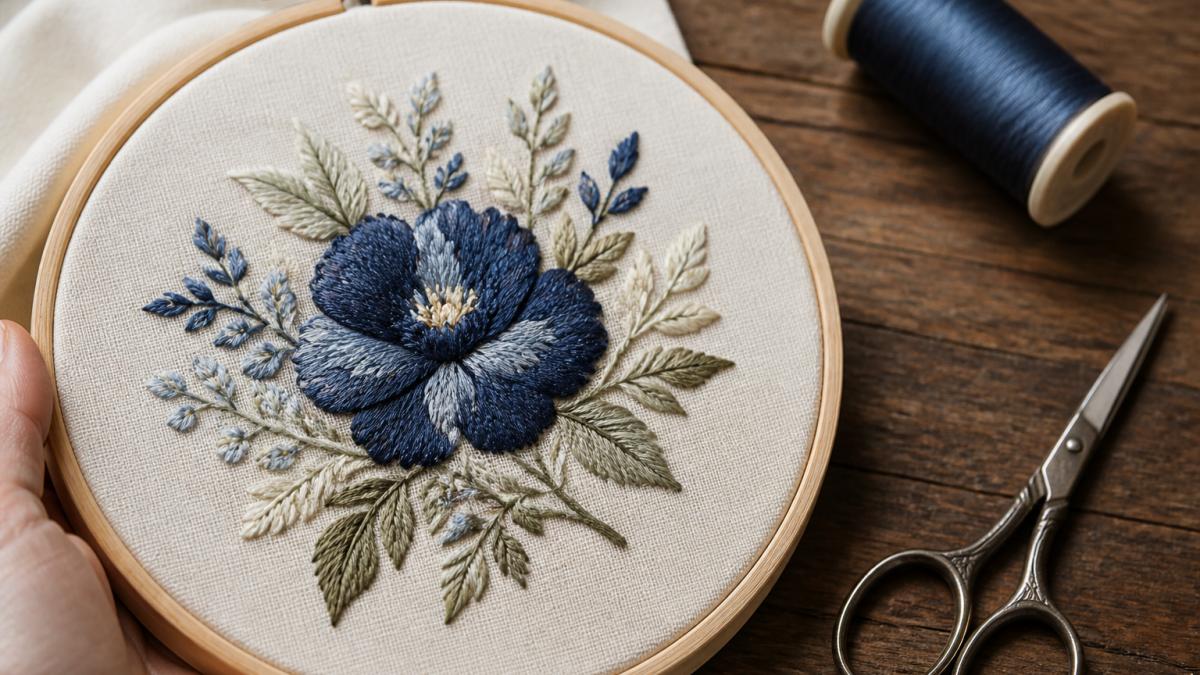
A common mistake is judging a design by its preview image. Previews are renders, not stitches. Test on scrap fabric first, ideally the same fabric and stabilizer you'll use for the final piece. Dense designs on lightweight fabric pucker; sparse designs on stretchy fabric distort. Neither shop's catalog tells you which stabilizer to pair, so that judgment stays with you.
If you're weighing handmade against mass-produced quality, our comparison of handmade versus mass-produced memorial gifts covers how construction differences show up over years of handling and washing.
Questions to Ask an Embroidery Business Before You Buy
A short list of questions filters out most disappointments before money changes hands. Ask these whether you're buying design files or commissioning finished work:
- What file formats and hoop sizes does this design support?
- Is commercial use included, and what does the license cover?
- Can I see a stitch-out sample or a test sew on similar fabric?
- What's the refund policy if the file won't load or the design is misregistered?
- How long does delivery take, and is the download instant or queued?
- Who do I contact if the file is corrupted, and how fast do they respond?
If you're commissioning finished embroidered keepsakes rather than buying files, our guide on how to commission handmade memory items walks through the process.
Custom Embroidery Turnaround Time and Download Experience
Check customer reviews for complaints about corrupted files or missing formats before you buy.
Frequently Asked Questions
How big is a 4x4 embroidery hoop?
A 4x4 hoop gives you a stitching field of about 4 inches by 4 inches, which is roughly 10 centimeters square. That is the smallest standard size and the one most entry-level machines ship with. It suits monograms, small motifs and pocket-sized designs. If you plan to embroider larger lettering or appliqué shapes, check the design's stitch file against your hoop size before you buy, because a design that does not fit will not run.
What should I compare when choosing an embroidery keepsake service?
Look at the design catalog, current pricing, and terms. A shop that answers your questions clearly can help you assess whether it suits your needs.
Can clothing be turned into a custom embroidered keepsake?
Yes. Embroiderers regularly stitch names, dates and small motifs onto baby clothes, wedding gowns, memorial shirts and quilts to turn everyday fabric into a keepsake. The main limits are fabric weight and stretch: very thin or highly elastic material needs stabilizer to hold its shape during stitching. Ask the business how they handle delicate fabrics and whether they test on a scrap before working on the actual garment.
What should I ask an embroidery business before placing an order?
Ask about the business's offerings, current pricing, and terms before placing an order.
Choosing between these two catalogs comes down to your project, not a scoreboard. If you'd rather skip the file wrangling and licensing homework entirely, Johnson Heirloom handles the digitizing, stitching, and finishing for you, with handmade goods built to be passed down and customized keepsakes made specifically for your memories. Get started with Johnson Heirloom and turn a box of saved clothes into an heirloom your family actually uses.


