

How to Embroider a Child's Drawing Onto a Keepsake
Last Updated: November 4, 2026
Quick Summary
Yes, you can embroider a child's drawing onto a keepsake. Drawings translate into thread more cleanly than photos because they are already made of lines, and bold outlines with simple shapes stitch best. Transfer the design by window tracing, light box, or printable transfer paper, then outline it with a backstitch.
- Pick drawings with bold lines, clear shapes, and a subject the child cares about.
- Skip faint pencil sketches, or trace over them in dark marker first.
- Scan a drawing at 300 dpi or higher before printing it onto transfer paper.
- Use water-soluble stabilizer as the most reliable method for dark T-shirts and tote bags.
- Spot clean wall hangings and hoops with a damp cloth instead of submerging them.
Table of Contents
- Why a Child's Drawing Belongs on a Keepsake
- Choosing the Right Drawing and Keepsake Fabric
- Transferring Kids Drawings to Fabric: Three Reliable Methods
- Best Embroidery Stitches for Line Art
- Matching Thread Colors to the Original Drawing
- Custom Embroidered Keepsake Ideas for Kids' Artwork
- Common Mistakes, Care, and Long-Term Preservation
- Commissioning a Professional Embroidered Keepsake
- Frequently Asked Questions
Why a Child's Drawing Belongs on a Keepsake
Yes, you can embroider a child's drawing onto a keepsake. Crayon lines and stick figures translate into thread more cleanly than photos do, because a drawing is already made of lines. The wobbly sun and six-fingered family portrait are exactly what makes them worth keeping.
A drawing is a snapshot of how a child saw the world on one ordinary afternoon. That is the whole appeal. You are not preserving great art. You are preserving a moment.
Here is what we cover below: how to pick the right drawing, move it onto fabric, choose stitches and thread, and keep the finished piece safe for decades.
Choosing the Right Drawing and Keepsake Fabric
Start with the drawing, not the fabric. The best candidates share three traits: bold lines, clear shapes, and a subject the child cares about. Skip anything shaded in heavily or drawn in faint pencil.
Picking a Drawing That Stitches Well
Look for these qualities:
- Strong outlines. Marker or dark crayon beats light pencil every time.
- Simple shapes. A self-portrait, pet drawing, or family drawing works well.
- Room to breathe. Crowded pages get muddy once stitched.
- Meaning over skill. A messy drawing of Grandma beats a neat one of a tree.
Watch out: faint pencil sketches fade into the fabric and leave you guessing where lines should go. Trace over them in dark marker first, or pick another drawing.
Fabric Options for Wearables and Wall Hangings
Fabric choice depends on where the piece will live. Light-colored fabric is easiest to work with because you can see the design through it during tracing.
- T-shirt or sweatshirt: cotton jersey, best for a wearable keepsake
- Tote bag: sturdy canvas, holds up to daily use
- Tea towel: linen or cotton, a practical kitchen keepsake
- Wall hanging: cotton or linen in a hoop, simple to frame
- Quilted blanket: cotton blocks, ideal for combining several drawings
Avoid stretchy knits for your first project. They shift under the needle and frustrate beginners.
Transferring Kids Drawings to Fabric: Three Reliable Methods
Transferring kids drawings to fabric comes down to three methods: tracing at a window, using a light box, and printing on transfer paper. Tracing is the most forgiving for beginners because you control every line, but each method has a failure mode worth knowing before you commit.
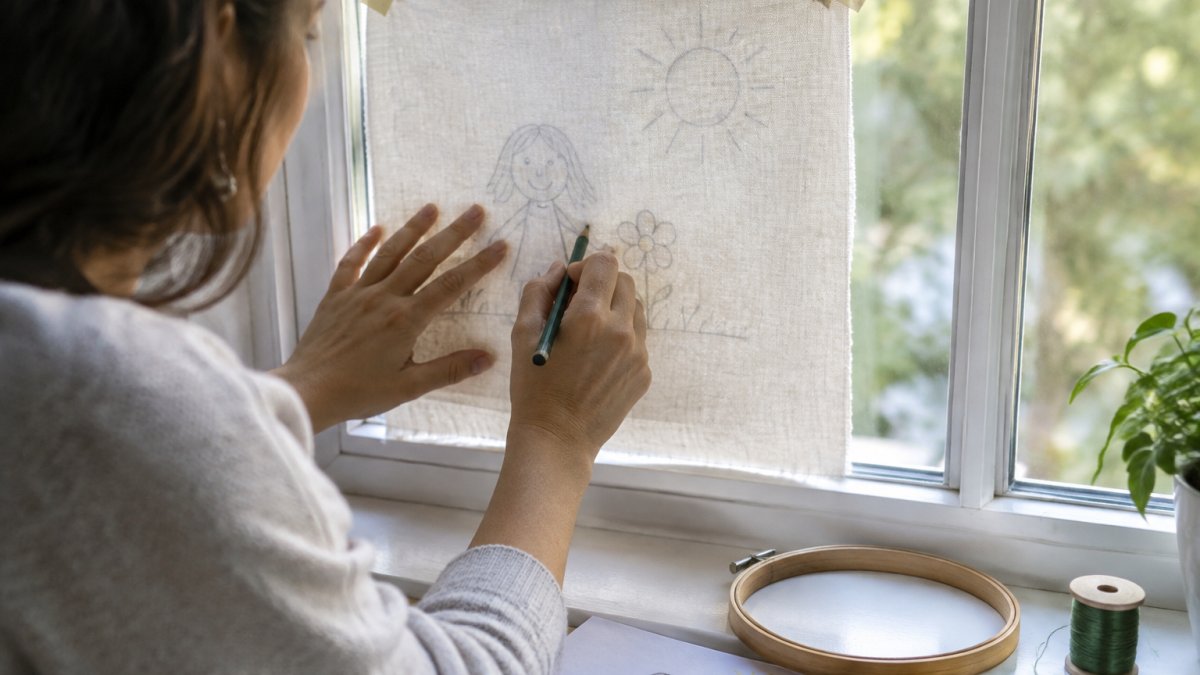
Window Tracing and Light Box Setup
Tape the drawing to a bright window. Tape the fabric over it. Trace the lines in a water-soluble pen or a light pencil. Keep the fabric taut so lines stay true.
Watch out: on dark or busy fabric, a pencil line disappears. Switch to a water-soluble pen in a contrasting color, or trace onto water-soluble stabilizer pinned over the fabric instead of directly onto the cloth.
Printable Transfer Paper and Digital Methods
Scan the drawing at 300 dpi or higher, print it onto transfer paper, and iron it on. Test on a scrap first.
Water-Soluble Stabilizer as a Transfer Surface
For dark fabric or complex drawings, print or trace the design onto water-soluble stabilizer, stick or baste it to the fabric, and stitch through both. When you rinse the piece, the stabilizer dissolves and leaves only thread. This is the most reliable method for dark T-shirts and tote bags, though it adds a rinse-and-dry step at the end.
Stabilizing Fabric Before You Stitch
Stabilizer keeps fabric from puckering as you stitch.
Here are the three transfer methods the article covers, and what each one is best suited to.
| Method | Best for | Key difference |
|---|---|---|
| Window tracing | Beginners | Most forgiving; you control every line |
| Light box | Tracing onto fabric | Same tracing approach as a window |
| Printable transfer paper | Scanned drawings | Scan at 300 dpi or higher, print, iron on |
| Water-soluble stabilizer | Dark fabric or complex drawings | Most reliable for dark T-shirts and tote bags |
Best Embroidery Stitches for Line Art
- Backstitch: the workhorse for outlines and text
- Split stitch: smooth curves and thicker lines
- Stem stitch: flowing lines like hair or grass
- French knot: eyes, dots, flower centers
- Satin stitch: filling small solid shapes sparingly
Keep it beginner-friendly. A child's drawing does not need shading or fancy fills. Clean outlines in a single thread weight look best.
Personalized Name Embroidery Service →
Matching Thread Colors to the Original Drawing
Match thread to the drawing, not to your décor. Pull the spools out and hold them beside the original artwork in daylight. Crayon red and thread red rarely agree under a lamp.
- Use one thread weight throughout for a clean look
- Choose cotton embroidery floss for most fabrics
- Pick two shades per color when the drawing has variation
- Keep black or dark brown for outlines
If you want a name or date stitched alongside the drawing, our personalized name embroidery service can add lettering to your own items.

Custom Embroidered Keepsake Ideas for Kids' Artwork
Custom embroidered keepsake ideas range from wearables to wall art. The right format depends on whether you want the piece used or displayed.
- Wearable keepsake: a drawing stitched on a T-shirt or sweatshirt
- Wall hanging: a hoop-framed drawing for a nursery or hallway
- Quilted blanket: several drawings on embroidered blocks, joined into one quilt
- Tote bag: a practical gift for grandparents
- Keepsake banner: a row of drawings on one hanging piece
A handmade gift like this beats a store-bought present every time. If you want to see finished options, browse our children's heirloom keepsakes collection, or start small with a custom embroidered keepsake ornament. For a larger statement piece, our personalized embroidered keepsake banner displays several drawings at once.

Common Mistakes, Care, and Long-Term Preservation
Preservation starts the day you finish stitching. Most damage comes from washing and storage, not from the stitching itself, so the care routine matters as much as the needlework.
Common mistakes we see:
- Skipping stabilizer, which causes puckering
- Using too many thread strands, which makes lines bulky
- Stitching too tight and pulling the fabric
- Washing a finished piece in hot water
- Storing a framed piece against an exterior wall where temperature swings cause condensation
Washing and Drying a Stitched Keepsake
For wall hangings and hoops, spot clean with a damp cloth rather than submerging the piece. Water-soluble stabilizer residue can wick back to the surface if a finished piece soaks too long.
Storage and Display
For a wall hanging, frame it with acid-free backing and UV-filtering glass if it will hang in a bright room. For heirloom storage, roll the piece around an acid-free tube with the stitched side facing out.
Consent and Sharing
On consent: if you plan to share a child's artwork publicly, get the child's okay first. It is their drawing. The same applies when uploading a scan to a printing or digitizing service, check the service's terms for how the image is stored and whether it may be used in marketing.
Commissioning a Professional Embroidered Keepsake
Commissioning a professional embroiderer makes sense when the drawing is complex or you want heirloom quality without learning to stitch.
At Johnson Heirloom, we have spent over eight years crafting handmade goods. If you would rather hand the project over, browse our embroidered keepsakes collection.
Frequently Asked Questions
What materials do I need to embroider a child's drawing?
Gather a light-colored fabric like cotton or linen, a water-soluble pen or fabric marker, a bright window or light box for tracing, a 4 to 6 inch embroidery hoop, embroidery needles, and cotton embroidery thread in the colors of the original drawing. Stabilizer helps keep knit fabrics from stretching. A simple backstitch and French knot cover most line art. Johnson Heirloom's Personalized Name Embroidery Service can add a name or date to your finished piece for $16.00.
How do you transfer a drawing onto fabric for embroidery?
Tape the drawing to a bright window, tape light-colored fabric over it, and trace the main lines with a water-soluble pen. For darker fabrics, use a light box or a transfer pen. Always test the pen on a fabric scrap first. Keep the traced lines simple: outlines, eyes, and key shapes only. Stabilize stretchy fabric with interfacing before tracing so the design does not distort while you stitch.
Can you embroider directly onto baby clothes?
For a finished keepsake, Johnson Heirloom's Custom Keepsake Memory Pillow is $45.00 and can incorporate an embroidered message.
How do I choose the best drawing for an embroidery project?
Pick a drawing with clear, simple lines: a self-portrait, family drawing, pet drawing, or a house with a sun. Avoid dense scribbles and tiny details that will not read in thread. Ask the child to redraw the subject with a dark marker on plain paper. The best keepsake designs have strong outlines and a few recognizable shapes.
A child's drawing will not stay crisp forever. Crayon fades, paper yellows, and the fridge door eventually gets cleaned. Stitching it into fabric changes that timeline. Johnson Heirloom builds each piece by hand, using your fabric and your artwork, with the care that keeps it intact for the next generation. Get started with Johnson Heirloom and turn one drawing into a keepsake your family actually keeps.


